

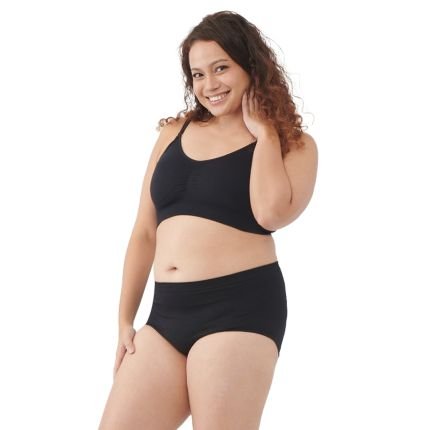
Bra–fashion alignment has become a critical business lever, where trend direction must work in parallel with comfort, body contour, and real wearability. Retailers often perfect the look, yet lose the sale when fit fails due to inadequate foundation. By offering architectural bra variety as a freedom enabler, retailers protect design intent and unlock higher-margin fashion conversions. Retailers who understand structural alignment don’t just sell apparel; they reduce friction, increase confidence, and build durable relevance.
The “Elevated” Aesthetic: Demi-Cups & Balconettes as Silhouette Tools
Experienced fashion retailers understand that certain fashion stories depend on proportion, not coverage. Square necklines, structured dresses, and occasion wear require deliberate lift and placement to read as intentional rather than accidental.
This is where architectural nuance of a quality push up bra becomes commercially relevant as they provide immediate lift, create fuller cleavage, and enhance the bustline, boosting confidence, especially for those with smaller busts or for wearing with plunging necklines, offering a desired silhouette for special occasions or everyday wear.
- Horizontal cup construction redirects volume upward and inward
- Upper fullness appears styled, not artificially exaggerated
- Necklines maintain shape without collapsing or gaping
From a retail perspective, this category protects the integrity of fashion narratives. Without it, customers experience “almost right” fits that undermine confidence. With it, garments look finished on the body, not just on the hanger—reducing fitting-room friction and reinforcing the perception of design intelligence.
The “Seamless” Intention: T-Shirt Jelly Padded Bras as Retail Infrastructure
Minimalist fashion is unforgiving. Form-fitting knits, refined cottons, and office silhouettes expose every structural flaw underneath. For retailers, this category is not about enhancement—it’s about risk management.
Seamless foundations succeed because they remove variables:
- Molded cups establish a neutral baseline that doesn’t interfere with garment design
- Adaptive padding mimics natural density, avoiding sharp edges under light fabrics
- Smooth finishes eliminate visual noise in high-stretch or pale textiles
When this layer is correct, outerwear sells itself. When it isn’t, customers blame the garment, the brand, or the store. Retailers who treat this category as essential infrastructure—not an add-on—see fewer complaints, fewer returns, and higher trust in their minimalist collections.
The “Structural” Demand: Strapless & Multiway Bras as Freedom Enablers
A modern wardrobe has brought an end of the “Special Occasion” Silo. That marks a shift where high-fashion engineering is now a daily requirement, and the retailer’s failure to provide that engineering is seen as a Service Failure. However, today’s consumer has zero patience for products that don’t work.
If an off-shoulder top requires constant tugging or “adjusting,” the customer views it as an engineering defect, not a fashion choice. Modern women no longer accept the “excuse” that a certain look is naturally difficult to wear as far as bra architecture match to the fashion “theme,”
Off-shoulder, strap-free as far as they stay up on a Cup G+ bust , showing bra-straps, obvious bra lines, and unconventional silhouettes are now everyday wear, not special occasions. Retailers ignoring this reality force customers into compromise, which may not be sustainable.
Engineering-led support changes the equation:
- Load shifts from shoulders to the ribcage
- Stabilization comes from grip and structure, not tension
- Balance is maintained even in fuller frames
For retail, this category expands sell-through across fashion-forward collections. Customers no longer avoid certain garments due to hidden limitations. Instead, choice widens—and so does basket potential. Structural confidence becomes a silent driver of conversion.
The “Wellness” Priority: Wireless Bralettes and Sports Bras as Retention Assets
The maturity of modern fashion is prioritizing comfort and wellness needs over trying to control the body to fit certain stereotypes or sartorial codes. That way, diversity of quality, safe bras has evolved from a preference into a purchasing principle. As work, movement, and rest blend into continuous routines, customers demand support that adapts rather than constrains.
Wellness-driven architecture delivers long-term value:
- Flexible materials accommodate daily fluctuations
- Compression and encapsulation reduce fatigue without rigidity
- Breathable construction supports longevity, not correction
For retailers, this category isn’t about trend cycles—it’s about retention. Customers return to what feels cooperative. These products lower wear resistance, increase repeat purchase behavior, and align retail offerings with the broader wellness economy shaping post-pandemic consumption.
In essence, when a business stops treating bras as a by-the-way “underwear” and starts treating them as garment architecture, it evolves from simply selling products to solving real-world wear and fashion challenges. When bra-stock diversity is deliberate; from design and fit to material, customers choose with precision, not compromise. This alignment closes the expectation-versus-reality gap that drives the majority of fashion dissatisfaction and returns.
