
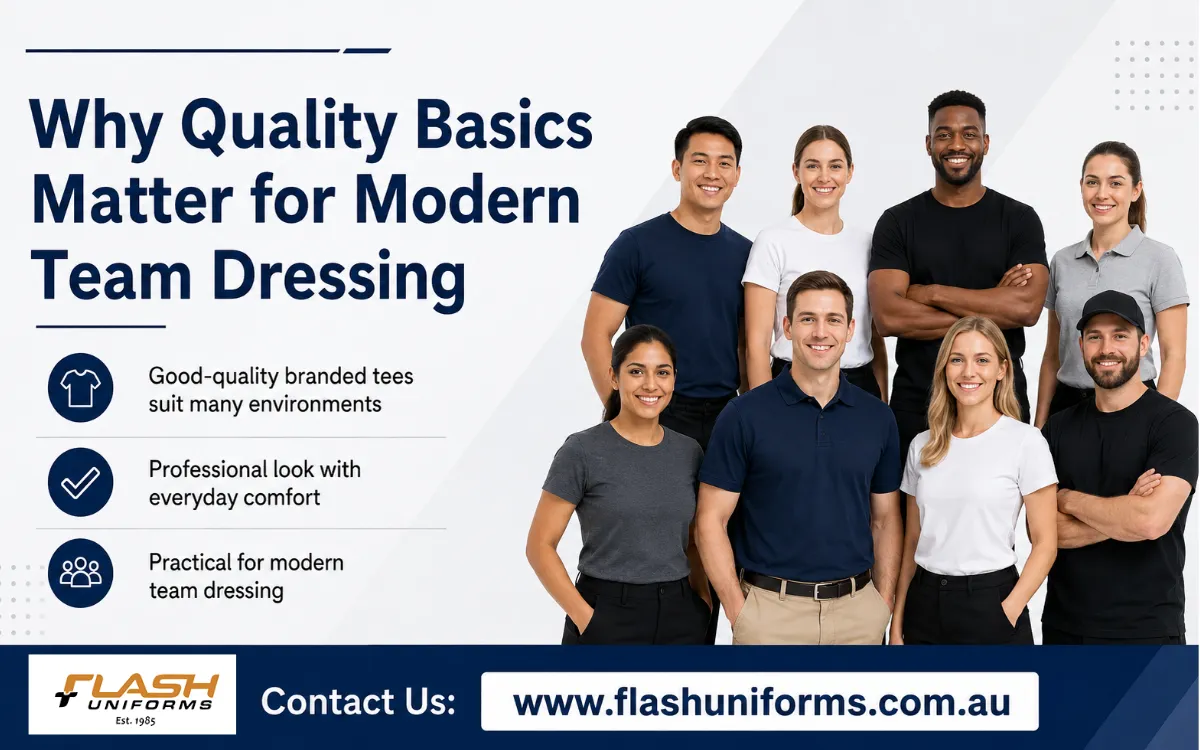
Not every workplace needs formal suits, structured jackets or complicated staff dress codes. Many contemporary businesses are choosing simpler uniforms built around well-fitting T-shirts, polos, sweatshirts and other versatile basics. When selected carefully, these straightforward garments can create a modern, approachable team appearance without sacrificing consistency.
The idea sounds simple, but not all basics perform equally. A T-shirt worn once on the weekend has a very different job from a garment worn repeatedly by an employee. Workplace basics need to feel comfortable, maintain their appearance and work effectively with company branding.
Why Businesses Are Choosing Simpler Clothing
Workplace culture has become more varied.
Technology companies, creative agencies, cafés, retail businesses, events teams, fitness organisations and modern service businesses may want employees to look coordinated without appearing overly formal.
Simple clothing can offer:
-
A relaxed professional appearance
-
Easy styling
-
Flexible layering
-
Straightforward branding
-
Comfortable daily wear
-
Easier wardrobe management
The challenge is making simple garments look intentional rather than casual or inconsistent.
Fabric Quality Changes the Overall Appearance
Two plain T-shirts may look similar in a product image but feel very different in daily use.
Fabric weight, construction and finish influence how a garment hangs on the body and how it responds to repeated wear.
Lighter fabrics may suit hot conditions, while heavier fabrics can offer a more structured appearance.
Businesses should consider the work environment before deciding what feels appropriate.
Think About Repeated Washing
Staff garments often need frequent laundering.
Therefore, care requirements matter.
A garment that is difficult to wash or maintain may not be practical even if it looks excellent initially.
Employees should be able to keep their clothing clean and presentable without complicated routines.
Fit Creates a More Professional Look
Simple clothing puts more emphasis on fit.
A plain shirt that fits well can look polished, while an oversized or badly fitting garment can appear untidy.
Because teams include different body shapes, businesses should investigate the available sizing and cuts before committing to one style.
It may be useful to offer more than one fit while keeping the colour and branding consistent.
Colour Is a Powerful Branding Tool
When garments are simple, colour becomes one of the main elements connecting clothing to the business.
Neutral colours such as:
-
Black
-
Navy
-
White
-
Grey
can create a clean foundation.
Businesses with stronger brand colours may incorporate them through the garment itself or through logo decoration.
Don’t Make Everything Compete
A bright garment, large logo and multiple contrasting colours can quickly become visually busy.
If your company logo is already colourful, a simple neutral garment may provide the best background.
Choose a Range With Versatile Basics
Businesses looking for modern tees, polos and casual garments can explore AS Colour when developing a contemporary staff wardrobe.
Using a coordinated range can help businesses move beyond a single T-shirt and introduce layers such as sweatshirts, hoodies or polos while maintaining a consistent overall style.
T-Shirts Can Work in More Roles Than Expected
A good-quality branded tee can be appropriate for many environments.
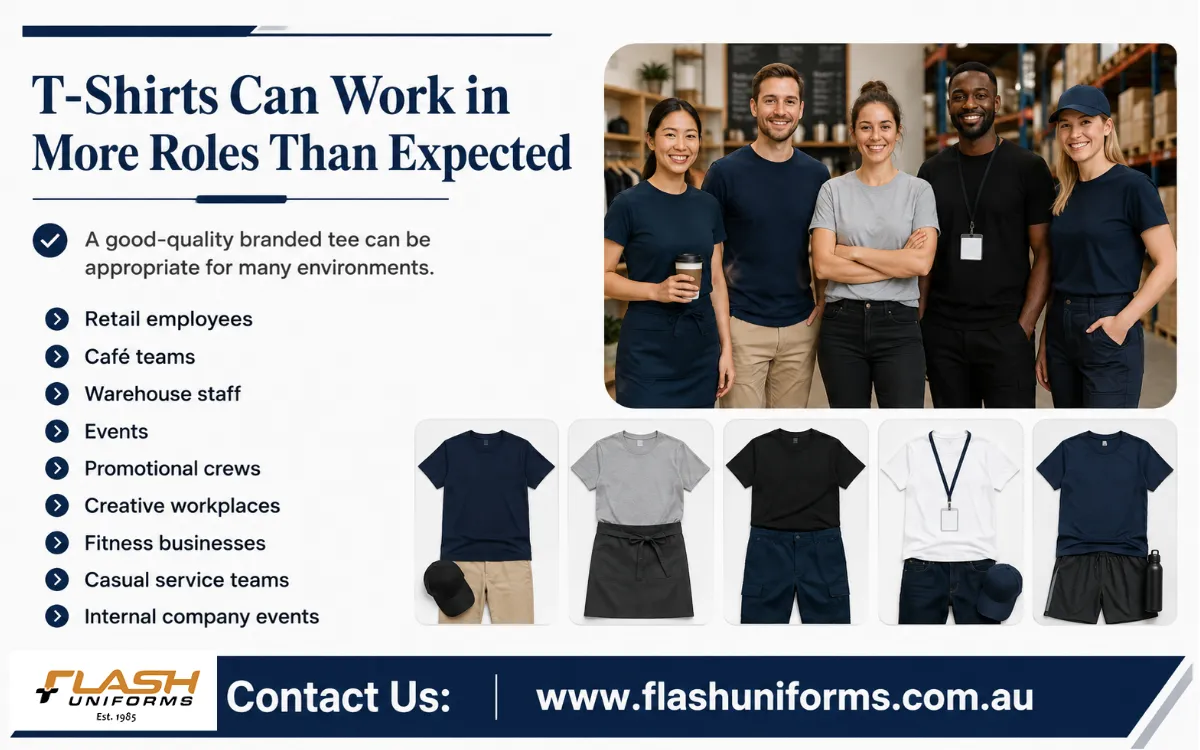
They are commonly used for:
-
Retail employees
-
Café teams
-
Warehouse staff
-
Events
-
Promotional crews
-
Creative workplaces
-
Fitness businesses
-
Casual service teams
-
Internal company events
The surrounding styling matters.
Pairing a neat tee with consistent trousers, clean footwear and subtle branding can create a more intentional appearance.
Polos Offer a Step Up in Structure
Businesses wanting something slightly more formal may prefer polos.
A collar introduces additional structure while retaining much of the comfort associated with a T-shirt.
Polos can be suitable for teams that move between physical tasks and customer interaction.
They can also provide an effective middle ground between casual and corporate clothing.
Layering Keeps the Look Consistent Year-Round
A uniform built only around T-shirts may work in summer but create problems when temperatures fall.
Plan for outer layers from the beginning.
A coordinated wardrobe might include:
Warm Weather
-
T-shirts
-
Polos
-
Lightweight shirts
Mild Conditions
-
Sweatshirts
-
Crew-neck jumpers
-
Lightweight hoodies
Cooler Conditions
-
Hoodies
-
Jackets
-
Vests
Using consistent colours and logo placement can maintain the visual identity even when employees add layers.
Branding Should Complement the Minimal Style
Simple garments usually look best with considered branding.
A small chest logo can preserve the clean appearance while clearly identifying the organisation.
Larger back printing may be useful for service crews, events or promotional teams where visibility is important.
Before deciding, consider what you want people to notice first: the employee, the business name or a promotional message.
For long-term staff clothing, understated branding often provides greater versatility.
Create Clear Styling Guidelines
Simple uniforms still need guidelines.
Without direction, employees may pair approved tops with completely different trousers, footwear or outerwear, weakening the coordinated appearance.
Guidelines might cover:
-
Approved garment colours
-
Acceptable trousers
-
Layering options
-
Footwear expectations
-
Logo placement
-
Garment condition
They do not need to be overly restrictive. The goal is simply to create a consistent baseline.
Don’t Ignore Employee Preferences
Modern workplaces increasingly recognise that employees feel more confident when clothing suits them.
Giving employees a choice between approved styles can help.
For example, a company might offer:
-
Tee or polo
-
Regular or relaxed fit
-
Short or long sleeves
-
Hoodie or crew sweatshirt
All options can remain within the same brand palette.
Replace Garments Before They Look Tired
Minimal clothing shows wear clearly.
Fading, stretched collars and damaged prints can make an otherwise coordinated team look less professional.
Build replacements into the program rather than waiting indefinitely.
Managers can review garments periodically and employees should know how to request replacements when necessary.
Why Choose Flash Uniforms?
Flash Uniforms offers Australian businesses access to a broad selection of workplace and branded clothing, from modern casual basics through to corporate, trade and specialist garments. Businesses can create coordinated programs for teams with different roles and choose branding options suited to their visual identity. This makes it easier to build staff clothing around practical everyday garments rather than forcing every organisation into a traditional uniform style.
Final Thoughts
Quality basics can be one of the most effective ways to create a contemporary team appearance.
The simplicity of the garments places greater importance on fabric, fit, colour and branding. Choose each carefully and plan how the pieces will work together across different seasons.
A modern uniform does not need to feel formal to look professional.
With consistent colours, appropriate fits and thoughtful decoration, T-shirts, polos and casual layers can create an approachable team identity that employees feel comfortable wearing and customers can recognise easily.